If you have a paver patio in Wake Forest, you have probably noticed green buildup forming between the stones. That algae can make your patio look aged and slippery, but removing it takes more care than most homeowners expect. Here is how professional paver patio cleaning protects your stones and the joints that hold them together.
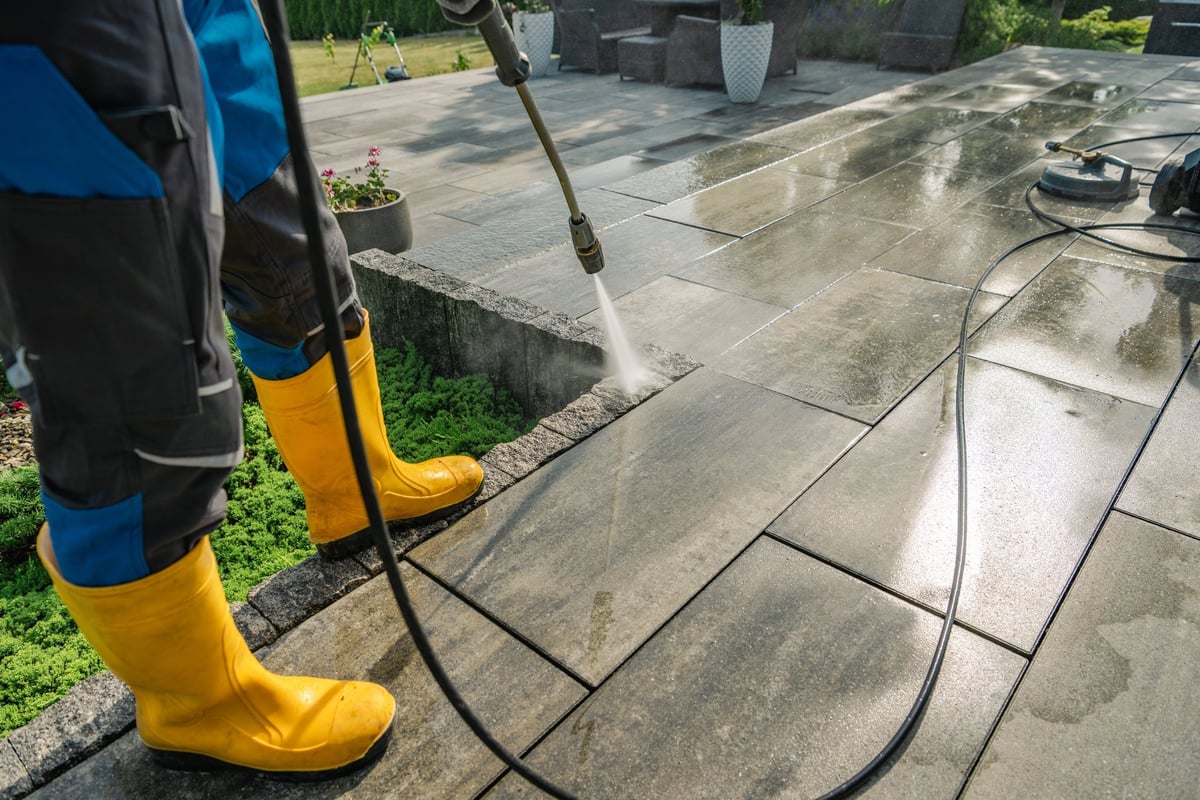
Paver patios are a beautiful addition to homes in Wake Forest. They provide a solid, attractive surface for outdoor dining, gatherings, and quiet mornings with coffee. But those same stones are constantly exposed to moisture, shade, and organic material. Over time, that combination turns into the green buildup you see spreading across your patio. The good news is that professional paver patio cleaning can remove it. The key is doing the work in a way that leaves your pavers clean and your joints intact.
Algae needs three things to grow: moisture, shade, and a surface to cling to. Your paver patio provides all three. Rain soaks into the joints and leaves a thin layer of water across the stones. Trees, fences, and the side of your house cast shade that keeps parts of the patio damp long after the sun has moved on. Fallen leaves, pollen, and soil collect in the gaps, giving algae and moss a place to take hold.
This makes outdoor patios in Wake Forest especially prone to green buildup. The humid North Carolina climate keeps surfaces moist for much of the year, and shade patterns only add to the problem. Even a well-built patio will develop algae over time if it never gets cleaned. Recognizing this buildup early lets you address it before it spreads into the joints where it becomes harder to remove.
Pro Tip: If you can see green tint or slippery patches on your pavers, it is time to think about a professional cleaning. Catching algae early protects both the stones and the joints.
Most people think of paver patios as a single slab of concrete, but they are not. A paver patio is made up of individual stones set side by side, and the gaps between them are filled with joint sand. That sand keeps the pavers locked in place and allows water to drain through to the base below.
This is a completely different setup from a poured concrete patio, which has no joints to protect. It is also different from a mortared brick patio, where the joints are held together with rigid mortar rather than loose sand. Because of this, the cleaning method that works for poured concrete or mortared brick can easily damage a sand-filled paver patio. Understanding what kind of joints you have is the first step toward cleaning them safely.
A pressure washer is a powerful tool, but on paver joints, too much power creates the opposite of the result you want. When a stream of water is aimed at the gap between two pavers, it can easily wash the joint sand away. Once that sand is gone, the pavers lose their stability. They can shift, settle unevenly, and leave edges that catch feet or furniture legs.
Several mistakes contribute to this problem. Excessive pressure forces water into the joints rather than across the surface. A nozzle held too close concentrates all of that force on one small spot. Equipment with unsuitable settings can erode the surface of the pavers themselves, leaving them rough and stained instead of clean. The correct approach depends on your specific pavers and the condition of your joints, which is why there is no single universal pressure setting that is right for every patio.
A thorough professional cleaning goes far beyond pointing a wand at the patio and pulling a trigger. When you discuss paver patio cleaning with a contractor, these are the practices you should expect them to walk through:
These are the kinds of questions worth asking before you book any paver patio cleaning. A contractor who takes these steps is treating your patio as the layered structure it is, not just a flat surface to blast clean.
The answer depends on the condition of your joints and how much material was lost. A healthy paver patio goes into a cleaning with its joints full and stable, and a careful cleaning should leave them that way. If the joints were already low before you started, or if aggressive cleaning washed sand away, then topping up the joint sand may be necessary to restore stability.
The best guidance comes from the paver manufacturer and the manufacturer of the joint sand itself. Each product has specific recommendations for care, and some sand types are designed to be replaced or refreshed after cleaning. Follow those instructions to keep your patio looking its best and performing properly. If your contractor notices joint material is missing, ask specifically what they recommend and why.
If you want a smooth, low-maintenance result, you might also ask about related care for the surrounding area, such as driveway cleaning, which keeps your whole outdoor space consistent. Whatever services you choose, be sure to confirm what is included before the work begins.
A little preparation on your end helps the cleaning go smoothly and protects your belongings. Before your scheduled cleaning:
Sharing this information up front helps your contractor plan a cleaning that protects your patio, rather than discovering issues mid- project. If you live in or near Wake Forest, these are good details to cover when you discuss the job with Triangle Power Wash.
There is no single schedule that fits every patio, but several signs tell you it is time to schedule a cleaning:
Rather than waiting for a set date on the calendar, pay attention to your patio's condition. Because every yard is different, no two patios should be expected to need cleaning at the same time. When buildup starts to affect how the patio looks or how safe it feels, that is the moment to reach out for professional patio cleaning.
It can. High-pressure streams aimed directly at the gaps will wash joint sand out of place. Slower, controlled cleaning at the correct distance and pressure protects the joints. This is one of the main reasons professional care matters on paver patios.
Yes. Polymeric sand is designed to harden and lock pavers together, so it behaves differently from loose sand. Follow the manufacturer's guidance, which often calls for gentler cleaning and careful water management to preserve the bonding material in the joints.
No. Green discoloration can come from moss, lichen, mildew, or even staining from organic debris. Identifying the actual cause matters because each type of growth can respond differently to cleaning. An inspection helps you choose the right approach.
Sealing can help protect your pavers and make future cleaning easier, but it is not right for every patio. Whether sealing makes sense depends on your paver type, the joint sand, and the look you want. Discuss this with a professional before applying anything.
A few factors influence cost, including the size of the patio, how much buildup is present, access to the work area, and the condition of the pavers and joints. A free estimate lets you get a clear price for your specific patio before any work begins.
Bring back the clean, safe surface you deserve. Triangle Power Wash provides professional paver patio cleaning in Wake Forest and the surrounding areas we serve.
Serving Wake Forest, Raleigh, and the greater Triangle area.