House Washing October 2026 8 min read

Tiny Black Dots on Your Siding in Raleigh NC: Artillery Fungus or Ordinary Dirt?

You notice tiny black dots along the lower siding of your Raleigh home. From the driveway, they resemble dirt splashed up during a storm. Up close, each dot looks like a raised speck attached to the surface. A rinse leaves the spots in place, and your clean siding still looks peppered with dark marks. Here is how to tell what you are dealing with — and what to ask before you schedule house washing.

Tiny black specks and dark spots on the lower siding of a Raleigh NC home, a possible sign of artillery fungus deposits.

Artillery fungus is one possible explanation. This mulch-associated fungus produces sticky spore masses that land on nearby surfaces. Identifying the source matters because washing the house and addressing the surrounding landscape involve different steps.

For Raleigh homeowners, the most useful approach starts with observation. Look at the shape of the spots, their location, the surrounding mulch, and the condition of your siding. Those details help you ask better questions before attempting removal or scheduling professional house washing.

What Is Artillery Fungus?

Artillery fungus refers to fungi in the genus Sphaerobolus. Penn State Extension describes tiny cup-shaped fruiting bodies growing in landscape mulch. These structures eject dark, sticky spore masses toward bright surfaces, including light-colored buildings and vehicles.

The material attached to your siding is a deposited spore mass. The fungus producing those deposits lives in the nearby organic material. Looking at the wall alone therefore gives you only part of the picture.

A white garage door, pale siding, or light-colored window trim makes the specks especially noticeable. Their scattered appearance often leads homeowners to mistake them for road tar or dirt. Penn State Extension also explains that the deposits adhere strongly and present removal challenges. Learn more about fungi in landscape mulch.

Why Raleigh Homeowners Should Inspect Nearby Mulch

A mulched planting bed beside the house provides a useful starting point when investigating unexplained black specks. Raleigh properties differ in their landscaping, shade, drainage, and exterior materials. Your own planting beds matter more than your neighborhood name when assessing a possible source.

For example, a homeowner in North Raleigh might notice spots above a mulched foundation bed. A homeowner in Brier Creek might find similar marks near a garage entrance. These are examples of where to inspect, rather than evidence of higher fungus activity in either neighborhood.

Walk around your property and compare affected and unaffected walls. Does the spotting appear above wood-based mulch? Do the same dots occur on nearby trim, planters, or outdoor furniture? Has the appearance changed since a landscaping project?

Record your observations before changing the beds. A few photographs of the wall and adjacent landscaping help a cleaning professional or landscape adviser understand the situation. Our Raleigh pressure washing service page provides an overview of the exterior surfaces Triangle Power Wash serves locally.

How to Recognize Possible Artillery Fungus Spots

NC State Extension identifies artillery fungus deposits as circular, dark, raised specks on surfaces such as walls, windows, cars, and leaves. Its gardening handbook also explains that removing a speck sometimes leaves a persistent stain. Review NC State Extension’s description.

Look closely without scraping. A phone camera with a close-focus setting offers a practical way to document the texture. Take one picture showing an individual spot and another showing the wider pattern across the wall.

Compare several dots. Are they distinct, rounded deposits, or part of a broad film? Are the marks concentrated beside a planting bed? Do nearby surfaces show the same pattern?

These observations support an assessment, but a photograph alone does not confirm every dark spot as artillery fungus. Paint overspray, insect-related deposits, and other contaminants also deserve consideration. Share any recent painting, driveway work, or landscaping changes when requesting advice.

Artillery Fungus Versus Ordinary Dirt

The first question is whether you are looking at deposited particles, a stain, or general surface buildup. Each category calls for a different evaluation.

Think about when you first noticed the marks. If spotting appeared immediately after work near the house, mention that event to your cleaning professional. If the dots occur above a mulched bed with no recent construction, include photographs of the bed.

Avoid deciding based on color alone. A dark mark does not identify the material responsible. Shape, texture, distribution, and the surrounding setting provide a more useful record.

Describe the problem specifically when scheduling service. “Raised black dots above the front planting bed” gives more information than “dirty siding.” The clearer your description, the easier the conversation about suitable cleaning methods and expected results.

Artillery Fungus Versus Broader Siding Discoloration

Your home might have more than one exterior cleaning issue at the same time. A broad area of discoloration and scattered raised black dots should receive separate attention during the assessment.

Ask your contractor to distinguish general buildup from individual deposits. A quote for routine house washing should explain whether spot treatment forms part of the work, whether testing is necessary, and which marks are likely to persist.

Our article on why siding looks dirty discusses broader exterior staining. This article focuses on a narrower question: what to do when tiny, attached black specks appear near your landscaping.

Separating these questions helps you evaluate results fairly. Cleaner siding around stubborn dots does not establish that the dots were ordinary dirt. A successful general wash and unresolved individual stains are separate outcomes.
Will Pressure Washing Remove Artillery Fungus?

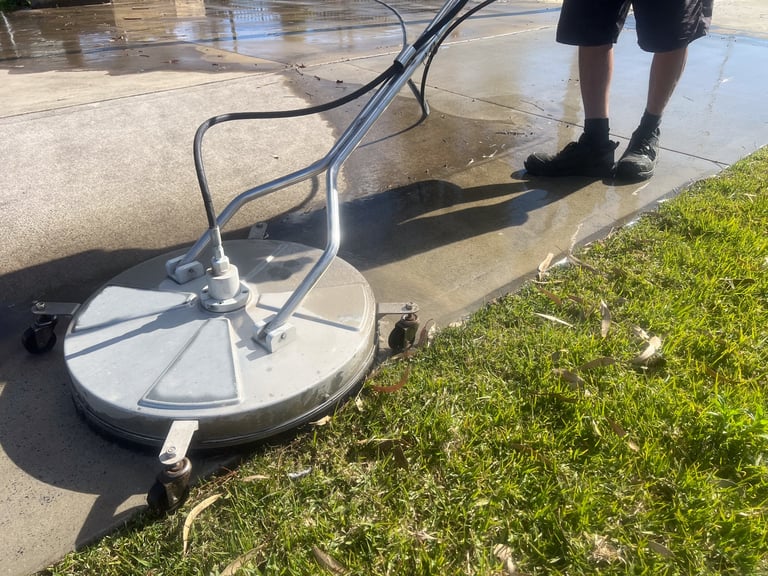
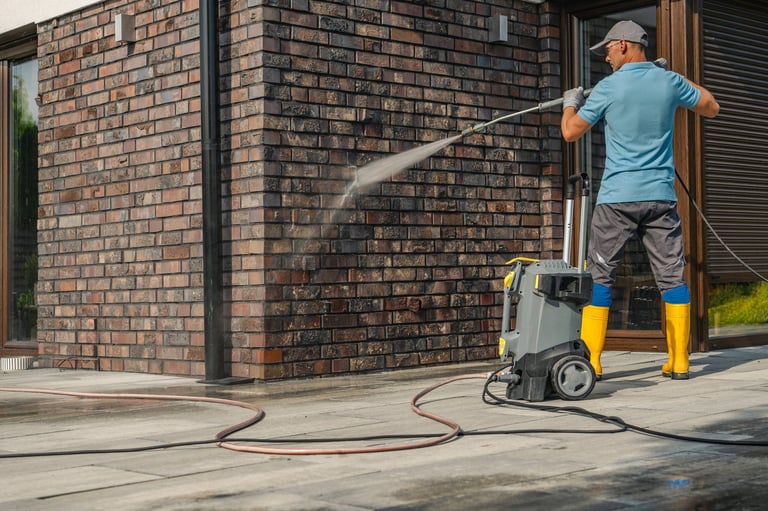
Treat complete removal as an assessment question rather than an automatic promise. Extension guidance describes strong adhesion and persistent staining, which means the appearance after cleaning deserves careful discussion.

Ask for a test on a small, inconspicuous area before approving extensive spot removal. Review the dry surface afterward. Look for a remaining dark mark, a change in sheen, or any difference between the tested patch and surrounding siding.

Your exterior material also matters when planning work. Share the siding manufacturer, product information, and maintenance instructions if available. Tell the contractor about previous repainting, repairs, or treatments.

Do not make water pressure the sole measure of cleaning quality. Ask how the proposed method matches your surface and what the contractor expects to improve. Triangle Power Wash’s house washing page provides a starting point for discussing an exterior cleaning appointment.

Why Scraping Every Spot Is a Poor Starting Plan

When a dot resists rinsing, scraping feels like the next step. Before working across an entire wall, pause and assess the potential result. Removing an attached deposit and restoring an unmarked finish are different goals.

NC State Extension’s description of persistent staining explains why those goals do not always align. A homeowner might spend hours removing individual specks and still see dark marks afterward.

Start with documentation and a limited professional assessment. Ask whether removal would change the finish and whether the result would look consistent from normal viewing distance. Review any manufacturer restrictions before approving tools or products.

For a large affected area, discuss priorities. Your front entry, garage surround, and side yard might have different visibility and maintenance needs. A clear plan helps you decide where testing and treatment offer the most practical value.

Address the Landscape Along With the Wall

If an assessment points to mulch-associated artillery fungus, include the landscaping in your next conversation. Cleaning deposited material does not establish that the source has changed.

Ask a landscape professional to evaluate the affected bed and explain the options for managing or replacing material. Discuss the plants, drainage, irrigation, and maintenance requirements before selecting a replacement ground cover.

Avoid treating every mulch bed on your Raleigh property as identical. A shaded foundation bed, an open garden, and a bed beside a driveway have different settings. Work from the observed problem area rather than replacing landscaping without a plan.

Coordinate the sequence of work. Ask whether landscape changes should happen before exterior cleaning, how crews will protect adjoining surfaces, and who will handle removed materials. Confirming responsibilities helps prevent confusion between the washing contractor and landscape provider.

Create a Useful Record Before Scheduling Service

A short property record improves the estimate conversation. Include the affected wall, approximate extent of spotting, siding material, and date you first noticed the dots.

Photograph the area from several distances. A close-up shows individual deposits. A midrange image shows their concentration. A wider photograph shows the relationship between the wall, planting bed, driveway, and nearby objects.

Include details about access. Tell the contractor whether the affected area sits behind shrubs, beside parked vehicles, above a porch roof, or near outdoor equipment. Explain which areas require attention and which areas you want assessed separately.

If your house sits in an HOA community, check the applicable maintenance and landscaping requirements before changing exterior finishes or planting beds. Obtain your own association’s instructions rather than assuming every Raleigh neighborhood follows the same rules.

Questions to Ask a Raleigh House Washing Company

Begin with identification. Ask what the contractor believes caused the spots and which observations support that assessment. Ask whether other explanations still need consideration.

Then discuss the proposed work. Does the estimate cover general house washing, individual spot treatment, or both? Will the contractor test the method first? What result would lead the crew to stop treatment and review the plan with you?

Clarify the expected finish. Ask whether visible staining is likely to remain and how the contractor will document preexisting marks. Request an explanation of what the service includes without treating an estimate as a guarantee of complete removal.

Finally, discuss the landscape connection. A washing company and a landscape professional have different roles. Ask which provider should assess the mulch, manage replacement material, and advise on ongoing bed maintenance.

A Hypothetical Raleigh Inspection

Consider a Raleigh homeowner who notices black dots along a white garage surround. The adjoining bed contains wood-based mulch, and similar specks appear on a planter beside the garage.

The homeowner photographs the deposits and sends the images with an estimate request. During the assessment, the contractor separates the individual spots from general dirt on the surrounding siding.

Before approving treatment across the garage, the homeowner requests a small test and reviews the dry result. The homeowner also contacts a landscape professional about the adjoining bed.

This example illustrates a decision process, rather than a Triangle Power Wash customer story or a promised cleaning result. The value comes from gathering evidence, assessing the surface, and coordinating the next steps.

Frequently Asked Questions About Black Dots on Siding

Get an Exterior Cleaning Assessment in Raleigh NC

Tiny black dots deserve a specific assessment before you select a cleaning method. Document the deposits, inspect nearby mulch, and ask clear questions about testing and expected results.

Triangle Power Wash serves Raleigh homeowners, including properties in North Hills, Brier Creek, Five Points, and Oakwood. Visit our Raleigh exterior cleaning page to review local services.

Ready for a free estimate?

Describe the spots and share photographs so the conversation starts with your property’s specific needs.

Related Reading